
Ptosis correction is a common procedure that fixes the appearance of the upper eyelid. Having this surgery done is a relief to a lot of people because having droopy eyes can always make one look more tired than they are. It can also give the impression that a person is not too involved in an activity. Sleepy eyes, as they also call it, may have a considerable effect on the confidence and eyesight of some people if not treated accordingly. If you are someone who has symptoms of ptosis, read on to know more about the condition and its treatment.
What is Ptosis Correction?
Ptosis, also known as drooping eyelids or blepharoptosis, is a condition that can affect one or both upper eyelids, wherein it lowers to more than the normal position. In some cases, a drooping eyelid can become severe to the point that it interferes with the person’s vision. Some of the causes of ptosis are the following:
- Congenital ptosis – A condition that is present when an infant is born, which is possibly brought about by genetics.
- Acquired ptosis – The condition acquired later in life due to tearing, stretching of the tendons, local eye problems, and nerve problems.
- Aponeurotic ptosis – A condition brought about by the aging process.
Ptosis correction is a surgical procedure that tightens the levator muscles, which is responsible for lifting the upper eyelid. The procedure can be considered as an aesthetic surgery if it only changes the person’s appearance. However, if the condition affects the person’s vision or health, then it is considered a medical operation that can be paid for by insurance. There are two kinds of methods that are used during a ptosis correction procedure. Which approach to be used is determined after the consultation with your doctor, where they analyze your upper eyelid using their technology and expertise. The two methods are the incisional and the non-incisional method.
Incisional
This method involves the removal of excess fats and muscles in the thick and thin layers of the eyelid. The feature of this method is a small incision on the upper eyelid. This kind of plan is recommended to those who have unnecessary eyelid fats, serious drooping eyes, and severe-looking sleepy eyes.
Non-incisional
The method involves the removal of unnecessary skin only in the upper eyelid. It features the use of micro holes that result in a more natural look, which produces minimal scarring and swelling. This method is mostly recommended for those who have thin eyelid skin, mild drooping of the eyelids, and those who do not have seriously tired-looking eyes.
Ptosis Correction in Korea
Why should you have your ptosis correction surgery in Korea? Because, first, South Korea has been dubbed as the “plastic surgery capital of the world,” thus anything that involves plastic surgery, whether for cosmetic or medical purposes, South Korean surgeons can do it. Second, South Korea is well known for eyelid surgeries to the extent that, according to estimates, one in three South Korean women between 19-29 have had plastic surgery, and the highest number of procedures done is eyelid surgery. Thus, Korean plastic surgeons have vast knowledge and experience of anything involving the eyelid anatomy than any other plastic surgeons from different parts of the world.
Benefits of Ptosis Correction
Having issues regarding the eye is a struggle for many since the eye is our way of seeing the world and having ptosis can block vision or cause stress to the eye and its surrounding areas. For this matter, getting ptosis correction surgery can give several benefits to those suffering from the condition. The benefits include:
- Improved vision
- Reduction in eye strain
- Improved appearance of the eyelid
- Better eyes and eyelid symmetry
- Avoidance of getting wrinkles in the forehead because of too much flexing to open the eyes
Ptosis Correction Procedure
Ptosis correction surgery is known as the most complicated procedure involving the eyes. This is why a well-experienced plastic surgeon should lead the surgical procedure. The whole process can last from one to two hours after the administration of local anesthesia, sometimes combined with sedation, on the patient.
Incisional method
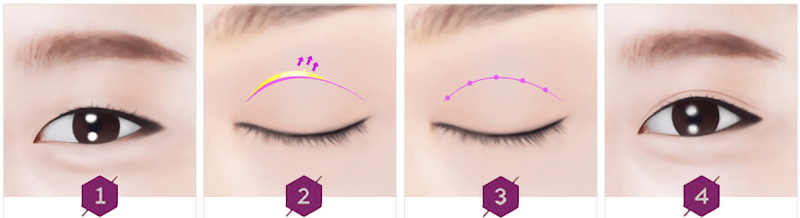
- The surgeon first examines the patient’s upper eyelid.
- They then design the line that is suitable for the shape of the patient’s eyes.
- They make the incision by following the line that they drew as a guide.
- They remove the excess fats and tissue from the patient’s eyelid.
- The muscles are then pulled up by tying the eyelid muscle and the tarsal plate together.
- The eyelid is sutured and made sure that everything is in its proper place.
Non-incisional method
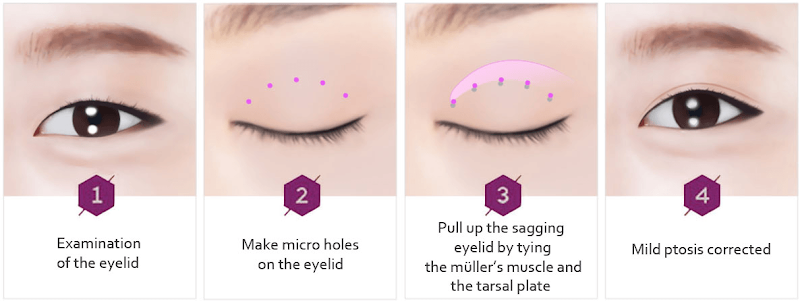
- The surgeon examines the upper eyelid and how it is covering the patient’s pupil.
- They then make micro-holes on the upper eyelid instead of an incision.
- The mildly drooping eyelid is cut short by tying the muscle that opens and closes the eyes.
- They clean the eyelid and put on the necessary bandages before the procedure ends.
Ptosis surgery recovery time
The recovery time after undergoing ptosis surgery takes about one to three weeks. During those days, when your eyelids are healing, it is possible for them to feel tight and sore at the same time. Also, your eyes may be watery, itchy, dry, and sensitive to light. It is essential to take good care of your eyelids during this time by not rubbing, cleaning them often, and putting an ice pack every 2-3 hours during the first three days. For pain and discomfort, your doctor will give you the proper medications that should be taken orally as well as instructions on how you should take care of yourself and the operated area. To avoid complications, you must follow your doctor’s instructions and attend the scheduled checkups. After 10-14 days, most people can go back to their work and daily activities with no issues.
Ptosis Correction before and after
Whether the method used was incisional or non-incisional, the outcome of the procedure is the same. After surgery, the pupils have increased visibility, and the eyelids look more refined with a proper crease.
Ptosis correction surgery is a good solution for people who are having problems with the weakened muscle in their upper eyelids. There are several causes of ptosis from genetics to accidental tears of the eyelid muscle because of eye rubbing. Most of the causes of ptosis, as mentioned above, cannot be prevented; that is why the ptosis surgery can come in handy.
The two methods, incisional and non-incisional, are effective options for the procedure. Not all people with ptosis require an incisional surgery, as some only have mild symptoms of the condition. However mild or severe the ptosis may be, it is still a must that a board-certified plastic surgeon performs the procedure because this kind of surgery is the most complex of all eyelid surgeries. Since South Korea is known to be the number one country where surgeons perform ptosis surgery, it is highly suggested that you consider having the procedure done in the country as the surgeons are not only knowledgeable but also well experienced.
If you have been struggling with ptosis for quite some time, you may want to consider having a consultation with a board-certified plastic surgeon in Korea. For an appointment, you may contact Cliniclo through their website and enjoy the benefits of the procedure after just one to two hours of surgery.
FAQs
For whom is Ptosis Correction most recommended?
Ptosis correction surgery is recommended for the following individuals:
- Those with compromised vision because of the sagging of the upper eyelids
- Those who have eyes that look tired
- Those who want to improve their appearance
- Those who have weak eye muscles
- Those who are having problems opening their eyes
- Those who lack a double eyelid
Is Ptosis Correction permanent?
The results of ptosis correction are permanent, but there is still a possibility that the condition may reoccur depending on the severity of the patient’s ptosis. If reoccurrence happens, then the patient may need to undergo repeat surgery.
What must I expect after Ptosis surgery?
After undergoing a ptosis surgery, expect some of the following:
- Soreness and swelling in the eye area
- Tighter eyelids
- Improved vision
- Dry eye syndrome
- Avoidance of strenuous activities for 2-3 weeks
This article is for general information only and is not medical advice. Talk to a qualified, board-certified plastic surgeon about your own situation.